
AdvenChair & Wanderlust Tours Ready to Roll for 2026
AdvenChair, a local trailblazer in all-terrain wheelchairs, and Wanderlust Tours, Central Oregon’s long-time leader in guided adventures, have just announced the schedule for their third series of accessible outings known as “AdvenTours.” On the heels of a virtually non-existent Central Oregon winter, the two partners are virtually chomping at the bit to get started.

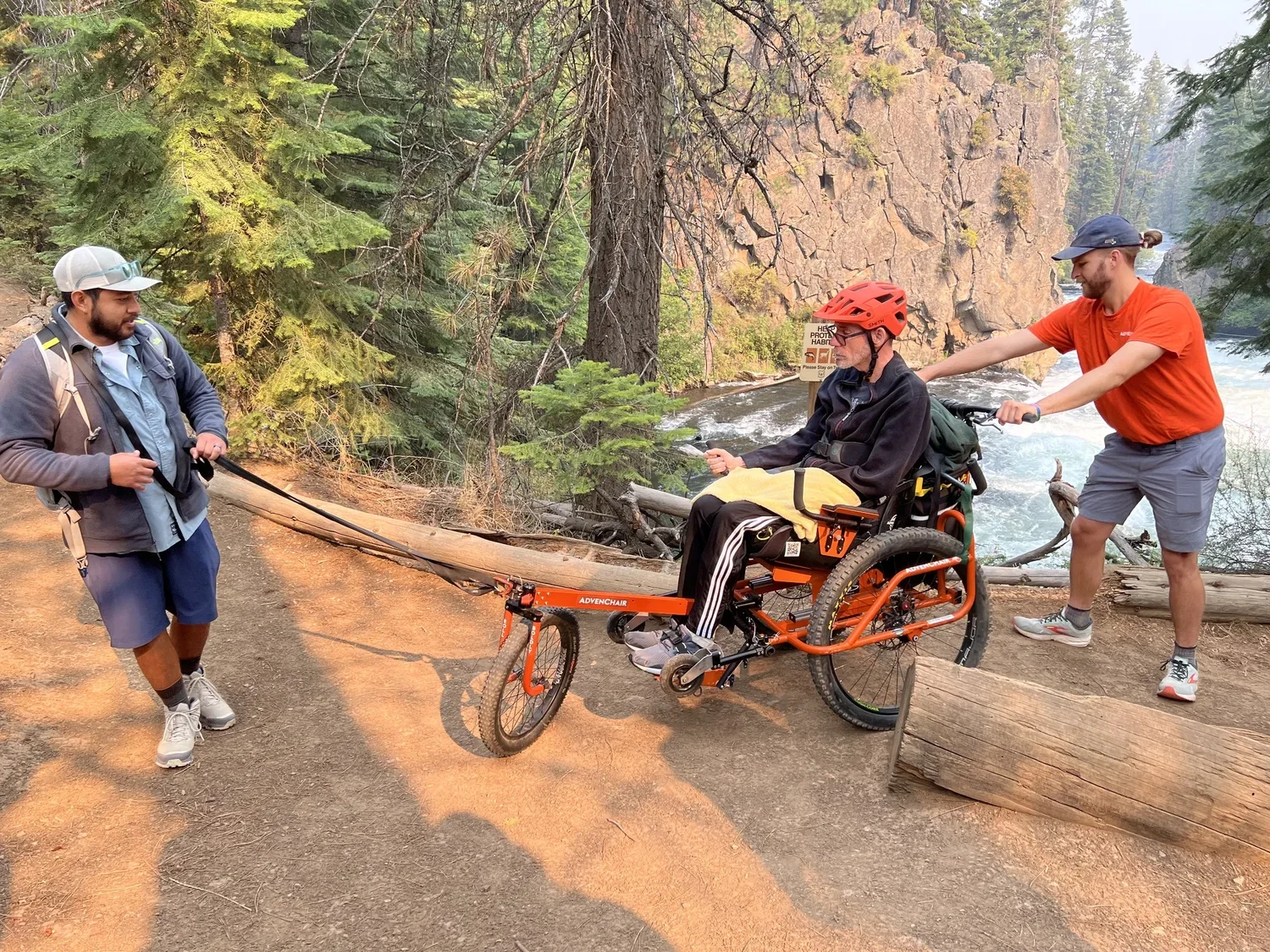
AdvenChair, a local trailblazer in all-terrain wheelchairs, and Wanderlust Tours, Central Oregon’s long-time leader in guided adventures, have just announced the schedule for their third series of accessible outings known as “AdvenTours.” On the heels of a virtually non-existent Central Oregon winter, the two partners are virtually chomping at the bit to get started.
“The one good thing about a winter with very little snowfall is that many trails are dry and ready to go,” said Geoff Babb, AdvenChair’s Founder and Chairman. “After two years of working with Wanderlust Tours to create life-changing experiences for people with special needs, we can’t wait to get rolling again.”
The collaboration between two outdoor industry pioneers that launched in 2024 has given people with mobility challenges of all ages the chance to experience some of Oregon’s most inspiring natural places. Combining AdvenChair’s unmatched durability, safety, and comfort with Wanderlust’s unique style of education, interpretation, and environmental appreciation earned them the prestigious Partnership Award at the Oregon Governor’s Conference on Tourism last year,
With more people from the Pacific Northwest and beyond discovering the quality and variety of the AdvenTours, it has become a real labor of love for the team at Wanderlust Tours.
““The options and opportunities for exploration and discovery that the AdvenChair provides are virtually endless,” said Courtney Braun, Owner of Wanderlust Tours. “And with family and friends encouraged to participate, all of the tours have been extremely rewarding for our guests as well as our guides.””
AdvenTours begin where the pavement ends.
In addition to Wanderlust’s regularly scheduled public tours in 2026, the next six months feature a popular array of AdvenTours that explore the best of Central Oregon and beyond:
Accessible Guided Scenic Hike at Smith Rock State Park, Sunday, May 24, 8am-1pm (Additional date available on Sunday, July 19th)
Accessible Guided Hike Deschutes River Trail: Benham Falls, Sunday, June 21, 8am-1pm
Accessible Guided Fort Rock Sunset Hike & Stargazing, Friday, July 10, 7:30pm-Saturday, July 11, 12:30am
Accessible Guided Crater Lake National Park Hike, Saturday, August 29, 8am-5pm
AdvenTours Accessible Guided Paulina Creek Hike, Saturday, September 19, 8am-1pm
AdvenTours Accessible Guided Scenic Hike at Tumalo Creek/Shevlin Park, Saturday, October 25, 8am-1pm
All AdvenTours depart from Wanderlust Tours headquarters in Bend’s Fred Meyer Shopping Center on SE Third Street and cost the same as their regular guided hikes. Guests are encouraged to visit advenchair.com/events for the latest updates and information.
Follow your own path. Not the beaten one.
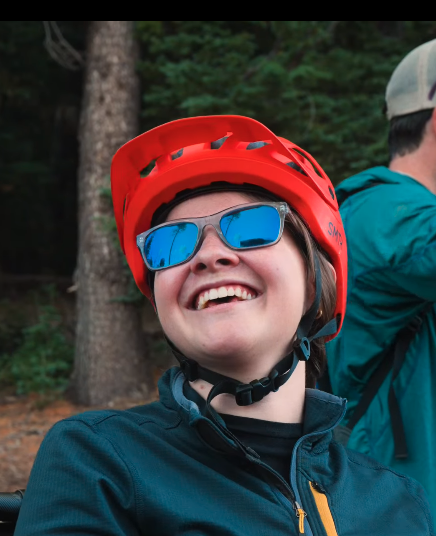
“It’s been the most amazing experience I think I’ve ever had!” said Hannah. “Being able to do something that I can’t do on my own has been absolutely fantastic! I feel on top of the world!”
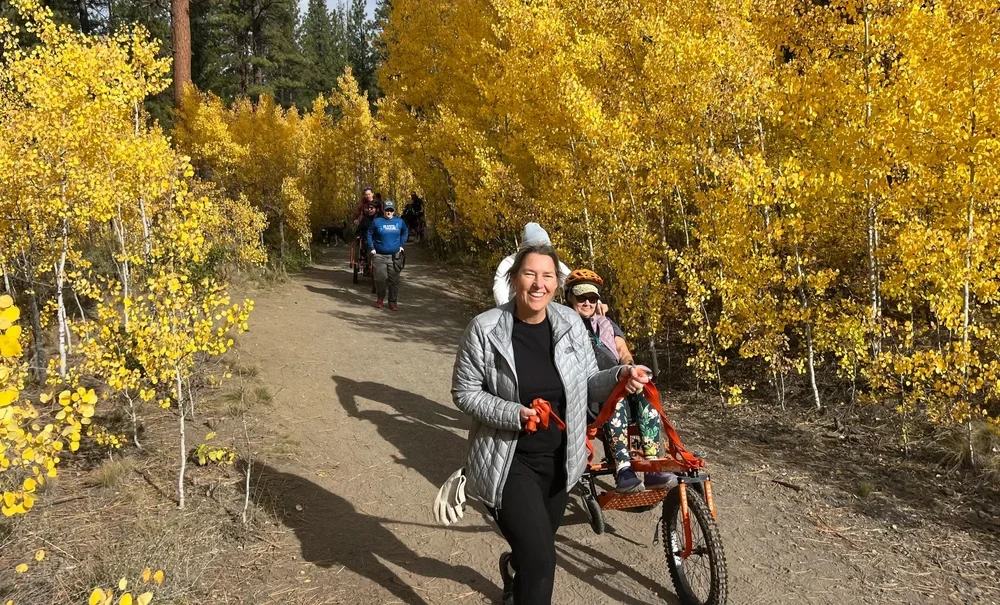
In addition to the pre-arranged AdvenTours, AdvenChairs are also available to Wanderlust guests for special custom tours with advanced reservations. A perfect example of this was evidenced last September when Hannah Crutchfield from Alabama discovered AdvenTours through Visit Central Oregon. With the help of the AdvenChair and a small team from Wanderlust Tours, she and her partner had no trouble reaching the top of Tumalo Mountain with its breathtaking view of the Cascades.
Says Braun: “Seeing Hannah summiting a mountain together with her partner was pretty special! I’m looking forward not only to getting more folks out into the beauty of Central Oregon’s outdoor spaces on our regular tours, but also to learning what other places guests want to see and explore.”
With countless trails already in peak condition, AdvenChair’s Geoff Babb is equally excited to offer more custom tours to places that many folks have only dreamed about.
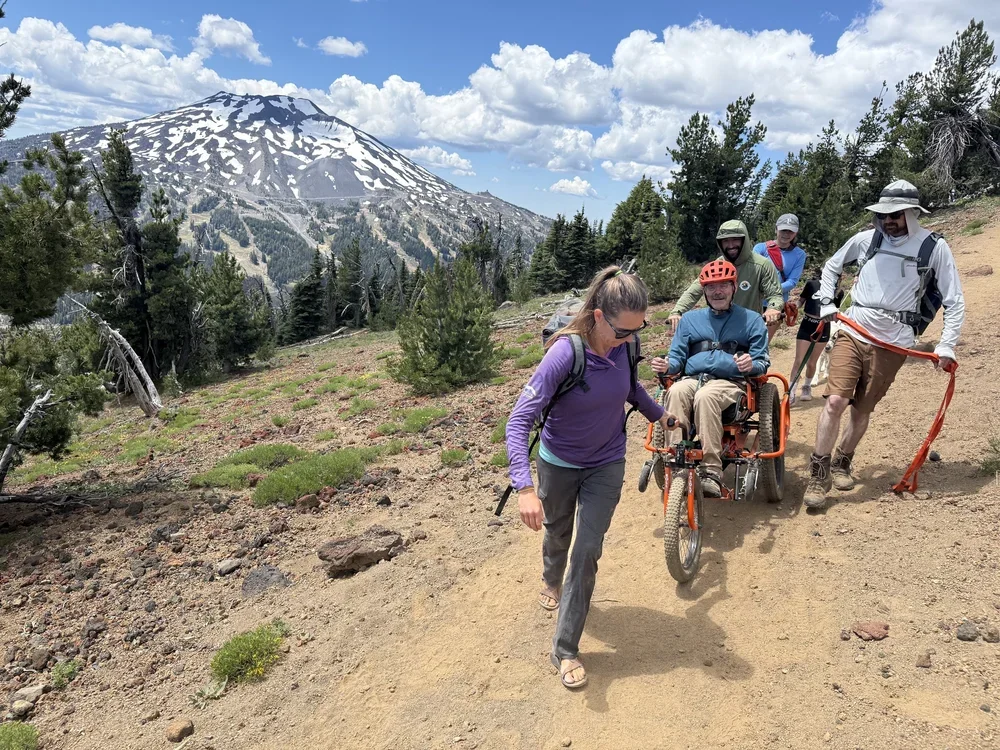
“I’ve witnessed the smiles from so many people who wouldn’t be out in the wilderness without the AdvenChair,” said Babb. “Whether it’s a family with a child who is disabled or a grandparent who can be with their grandkids on their favorite trail as they pass the love of the outdoors on to future generations, it’s very heartwarming to see.”
About AdvenChair:
AdvenChair is an all-terrain wheelchair designed for people with mobility challenges who want to venture off the beaten path and experience the grandeur of the wilderness. It is the brainchild of Geoff Babb, a fire ecologist and avid outdoorsman from Bend, who loved to ski, mountain bike and backpack with his wife and twin boys until a near-fatal brain stem stroke on November 10, 2005 forced him to use a wheelchair.
While the stroke forever changed his ability to move, Babb soon discovered that the biggest obstacle to experiencing a simple outing on local trails with his family again was not so much his body, but the frailties of common wheelchairs. Rather than lobbying for wheelchair-accessible wilderness trails, Babb chose to develop a wheelchair capable of adapting to the trails, and the AdvenChair was born.
On November 10, 2017, exactly 12 years to the day after his stroke, Babb survived a second brain stem stroke, which was a major setback. Yet it made him more determined than ever to share his all-terrain chair with other people dealing with permanent or temporary limited mobility. While developing the first AdvenChair, Babb also launched The Onward Project, LLC, to inspire, encourage and enable outdoor adventures for people of all abilities.
About Wanderlust Tours:
Since 1993, Wanderlust Tours has welcomed guests to vibrantly share the natural and cultural history of Oregon in order to instill appreciation and protection of the environment. We hold great respect for the natural surroundings of our beautiful central Oregon landscape and hope to introduce people to these delicate ecosystems while maintaining a low impact on the environment. Wanderlust Tours is made up of people who are passionate about the intricacies of nature. We thrive on sharing our knowledge and passion for the natural world with those who join our tours!
We are so excited to be partnering with AdvenChair and to help those with mobility challenges get into the outdoors and explore beautiful areas that initially may not seem accessible. With the AdvenChair off-road wheelchair, we can empower every member of our community in their quest for adventure!
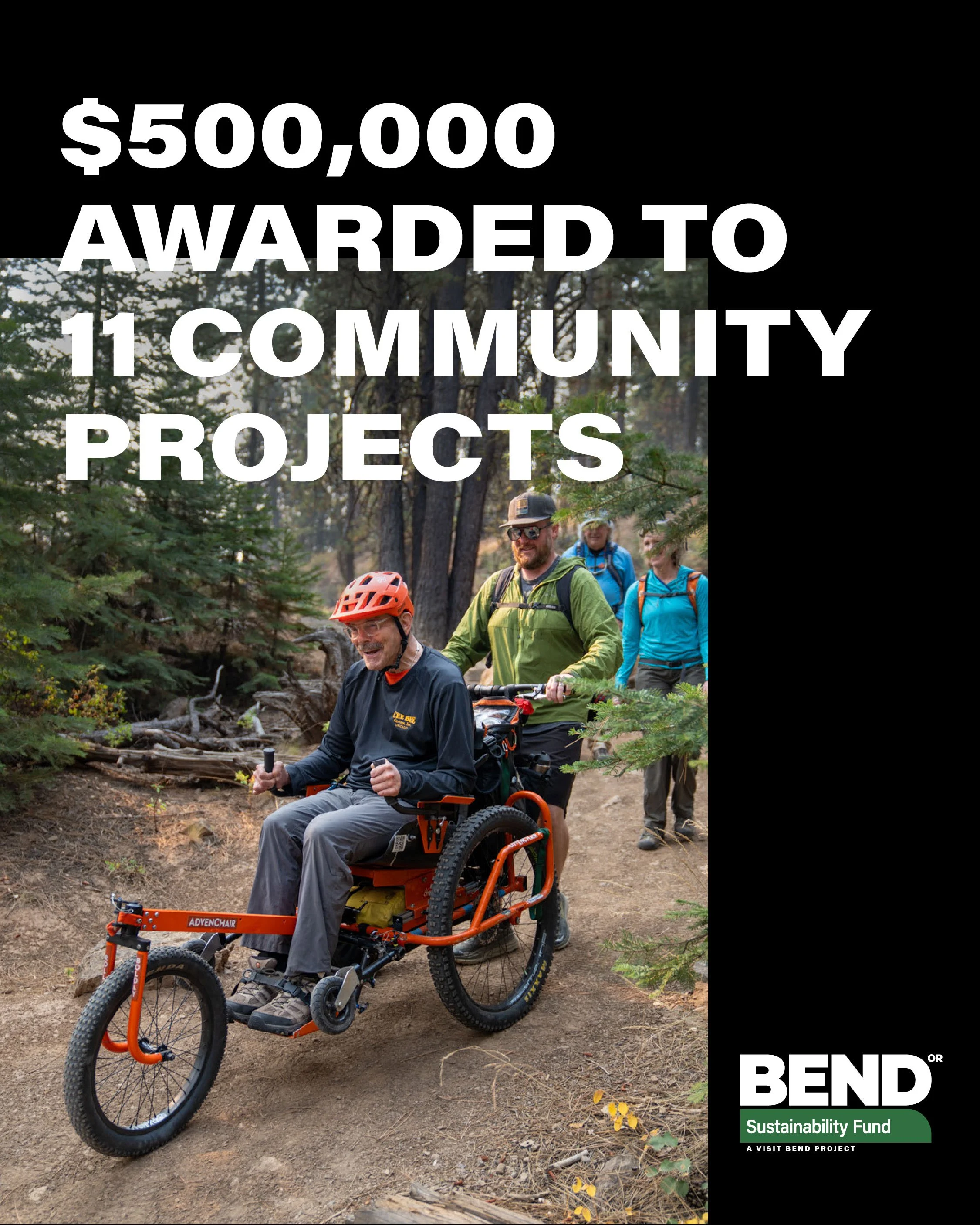
Powered by Tourism: Visit Bend Grants $500,000 to 11 Impactful Community Projects, including The Onward Project for AdvenChairs
The Onward Project will double its fleet of rugged, all-terrain “AdvenChair” wheelchairs, allowing families and friends to hike together regardless of mobility challenges, thanks to the Bend Sustainability Fund! From replacing hundreds of thousands of single-use containers at food cart pods to building one of the only adaptive cycling centers on the West Coast, 11 local projects will receive funding through the 2026 Bend Sustainability Fund (BSF), a key grant program in Visit Bend’s broader destination-stewardship strategy that ensures tourism continues to support the long-term health of our community.

POWERED BY TOURISM: VISIT BEND GRANTS $500,000 TO 11 IMPACTFUL COMMUNITY PROJECTS
Now in its fifth year, the Bend Sustainability Fund has reinvested more than $3.8 million of visitor-tax dollars into tourism-related projects that benefit the people, environment, and economy of Bend.
The Onward Project will double its fleet of rugged, all-terrain “AdvenChair” wheelchairs, allowing families and friends to hike together regardless of mobility challenges.
For immediate release – March 17, 2026
(BEND, Ore.) From replacing hundreds of thousands of single-use containers at food cart pods to building one of the only adaptive cycling centers on the West Coast, 11 local projects will receive funding through the 2026 Bend Sustainability Fund (BSF), a key grant program in Visit Bend’s broader destination-stewardship strategy that ensures tourism continues to support the long-term health of our community.
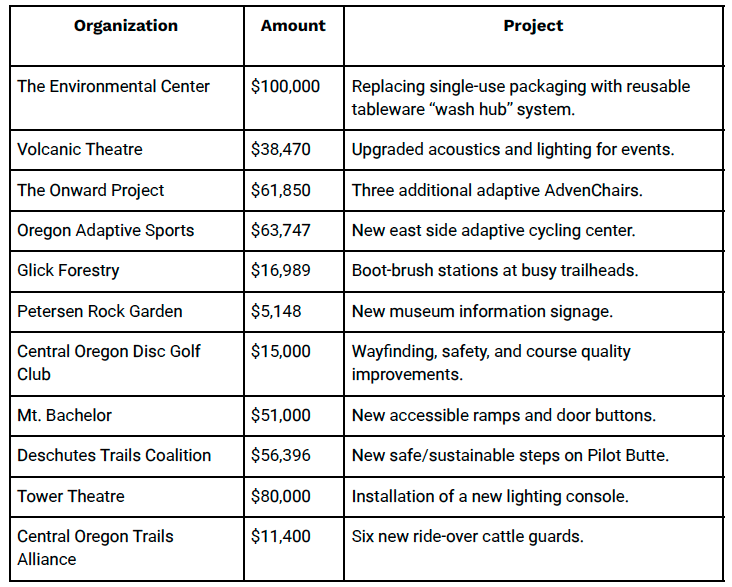
An independent advisory council of Bend community members reviewed applications that collectively requested more than $1 million. With $500,000 to award, the council recommended funding 11 grant recipients. Projects that expand outdoor access for people of all mobilities will receive nearly half of this year's funding, which comes entirely from a fee visitors pay to stay at hotels, vacation rentals, and other lodging properties in Bend:
Oregon Adaptive Sports will create an Adaptive Cycling Center at Pine Nursery Park — just the third on the West Coast — offering state-of-the-art adaptive cycles.
The Onward Project will double its fleet of rugged, all-terrain “AdvenChair” wheelchairs, allowing families and friends to hike together regardless of mobility challenges.
Central Oregon Trail Alliance will install “ride-over” cattle guards at the Cline Butte / Cascade View trail system, removing barriers for all cyclists, including adaptive riders.
Mt. Bachelor will upgrade Sunrise Lodge so adaptive skiers can move between the lodge and chairlifts more easily.
Grants this cycle also support venues and spaces that strengthen year-round community and cultural infrastructure. Funding will upgrade the Tower Theatre’s lighting system, improve the Volcanic Theatre’s sound and production capabilities, enhance wayfinding and infrastructure at Skyline Disc Golf Course, and install new signage at the Petersen Rock Garden, preserving a 91-year-old historic folk art landmark.
Harnessing Bend’s visitor economy to support environmental stewardship remains a core pillar of Visit Bend’s work. The largest grant this cycle, $100,000, will help The Environmental Center launch a regional reusable dishware “Wash Hub” — a centralized commercial dishwashing and collection system designed to replace more than 250,000 pieces of single-use packaging at food cart pods and events.
The Base Trail on Pilot Butte will also receive significant improvements. The Deschutes Trails Coalition will replace aging stairs, improve drainage, and maintain safe, continuous access on one of Bend’s most iconic and heavily used trails. Meanwhile, Glick Forestry will install 14 boot-brush stations at high-traffic trailheads — including Rim Rock, Tumalo Falls, and Green Lakes — to help prevent the spread of invasive species.
Grants range from $5,148 to $100,000. In total, the Bend Sustainability Fund has now awarded $3,883,094 across 42 projects since its inception in 2021. These investments directly reflect what Bend residents consistently say they value: environmental protection, infrastructure improvements, and expanded access to recreation, while enhancing the visitor experience.
Projects were evaluated on shovel-readiness, demonstrated community support, long-term impact, and visitor benefit as defined under state law. After scoring, Visit Bend's board of directors approved all 11 of the council’s recommendations. Eight of the 11 recipients are first-time awardees.
Visit Bend is asking residents to rank this year’s funded projects through a two-week online community ballot. The top two vote-getters will each receive an additional $1,000 in support. The ballot is open now through April 1 and will be shared through Visit Bend’s website and social media channels. It is also available here.
How the Bend Sustainability Fund works
The Bend Sustainability Fund is supported entirely by a portion of Bend’s transient room tax (a 10.4 percent lodging tax) paid by visitors who stay overnight at commercial lodging properties and vacation rentals within city limits. The majority of that revenue — more than $9 million annually — goes directly to the City of Bend to help fund roads, police, fire, and other core services, offsetting costs that would otherwise fall more heavily on residents.
Visit Bend uses a separate, restricted portion of those visitor-generated dollars to fund the Bend Sustainability Fund. By law, those funds must support projects that create, steward, or protect tourism-related facilities with a life of at least 10 years. Projects eligible for BSF funding must demonstrate meaningful visitor use while delivering lasting community benefit.
Past investments have included trail restoration, cultural facility upgrades, recreation infrastructure, and environmental initiatives designed to sustain Bend’s outdoor spaces.
By directing visitor-generated revenue into tangible community assets, the Bend Sustainability Fund ensures tourism continues to support local organizations and businesses while strengthening the quality of life for residents.
Find a full list of funded projects since 2021 and additional information about the Bend Sustainability Fund at sustainability.visitbend.com.
2026 Bend Sustainability Fund Grantees
About Visit Bend
Visit Bend is a non-membership, nonprofit organization dedicated to supporting and enhancing the visitor experience while stewarding a vibrant and sustainable community in Bend, Oregon. We serve as a leading source of information on Bend’s lodging, dining, outdoor recreation, arts and culture, and vacation planning.
About the Bend Sustainability Fund
The Bend Sustainability Fund reinvests short-term lodging tax revenue paid by visitors into tourism-related facilities that create and steward sustainable experiences within Bend’s community. Established in 2021, the fund supports projects designed to protect, enhance, and sustain Bend as a special place to live and visit for generations to come.
###
For media inquiries, contact:
Tim Neville
Visit Bend Lead Storyteller + Communications Manager tim@visitbend.com, 541.241.6845

Video: Andy’s Adventures: Wanderlust Tours with AdvenChair in Central Oregon
In the northwest, we’re known for our beautiful vistas and challenging hikes. But for people with mobility issues, many of those sights remain out of reach. In this Fox 12 Oregon episode of Andy’s Adventures, Andy Carson introduces you to a device that promises to change that. He went to Smith Rock State Park and met the inventor of the AdvenChair.
In this Andy’s Adventures, Andy Carson went to Smith Rock State Park and met the inventor of the AdvenChair.
KPTV.com Fox 12
By Andy Carson
DESCHUTES COUNTY, Ore. (KPTV) - In the northwest, we’re known for our beautiful vistas and challenging hikes. But for people with mobility issues, many of those sights remain out of reach. In this Fox 12 Oregon episode of Andy’s Adventures, Andy Carson introduces you to a device that promises to change that. He went to Smith Rock State Park and met the inventor of the AdvenChair, Geoff Babb.
For more details about AdvenChair and Wanderlust Tours, click here and here.

Oregon Becomes First State to Earn ‘Accessibility Verified’ Status from Wheel the World
The Oregon Tourism Commission, dba Travel Oregon, has worked with Wheel the World (WTW) to earn the state of Oregon a landmark designation: the first state to become “Accessibility Verified.” The designation elevates transparency and promotes inclusivity in travel experiences for people with visible and non-visible disabilities. AdvenChair with WanderLust Tours, through their partnership in AdvenTours, is featured in Wheel the World’s experience in Central Oregon.

Travel Oregon partners with Wheel the World to pioneer a new standard for inclusive travel
PORTLAND, Ore. (September 22, 2025) — The Oregon Tourism Commission, dba Travel Oregon, has worked with Wheel the World (WTW) to earn the state of Oregon a landmark designation: the first state to become “Accessibility Verified.” The designation elevates transparency and promotes inclusivity in travel experiences for people with visible and non-visible disabilities.
This milestone follows a coordinated statewide effort to evaluate, promote and improve the accessibility of tourism businesses across all seven of Oregon’s tourism regions, from hotels and outdoor adventure experiences to cultural attractions and culinary experiences. Oregon is now the first state to offer visitors with disabilities and/or mobility challenges the opportunity to plan travel itineraries through an online resource that keeps their needs top of mind.
Through this coordinated statewide effort and previous local efforts, WTW has assessed more than 750 hotels, restaurants and tourism businesses in 43 communities across the state (with more to come), and all Travel Oregon Welcome Centers, evaluating mobility, visual, hearing, and cognitive features to ensure travelers with diverse needs can plan with confidence. These assessments are available on WTW’s website to offer visitors with disabilities the ability to plan trips knowing their needs will be met at each destination along the way.
“Earning the distinction of being the first Accessibility Verified state reflects Oregon’s deep and ongoing commitment to welcoming all travelers,” said Kevin Wright, VP of Brand Stewardship at Travel Oregon. “Through this designation, we’re building a tourism landscape where inclusion is meaningful and central to the visitor experience.”
Through WTW’s Accessibility Verified program, accessibility features of local hotels, experiences and attractions have been made available online through www.traveloregon.com and www.wheeltheworld.com. This initiative provides access to detailed, reliable information on accessibility which is a crucial factor in trip planning for travelers with disabilities. Unlike other programs based on self-reporting or ADA compliance, WTW’s Accessibility Verified program uses a structured, on-site evaluation process backed by physical measurements across multiple dimensions of accessibility.
“Traveling with a disability often means facing the unknown,” said Alvaro Silberstein, CEO & Co-founder of Wheel the World. “Our vision is to remove uncertainty and establish trust by helping every destination verify, improve, and promote accessibility—creating real impact for travelers with disabilities and measurable returns for communities. By becoming the first state to achieve Accessibility Verified status, Oregon is setting a precedent and proving how powerful this cycle can be for travelers and for the communities that welcome them.”
To help bring the story to life, Travel Oregon and Wheel the World partnered with accessibility advocate Kaylee Bays, and the first wheelchair user to compete on So You Think You Can Dance. Kaylee shares her journey with her 140,000 followers on Instagram (@slayleebays), helping inspire a wide audience with her experiences. Kaylee explored Oregon’s accessible offerings firsthand, experiencing the dramatic landscapes of Smith Rock and kayaking surrounded by stunning mountains on Hosmer Lake in Central Oregon.
“I used to assume nature wasn’t something I could really be part of. Oregon showed me that I was wrong,” said Kaylee, who has Ehlers-Danlos Syndrome (EDS), a degenerative condition she was diagnosed with at age 21. “It opened a whole new world for me. Kayaking and experiencing places like Smith Rock showed me that people are taking real steps to make outdoor adventures inclusive and accessible.”
The partnership with Wheel the World is part of Travel Oregon’s broader strategy to make the state more inclusive and welcoming for both visitors and residents with disabilities. With accessibility data now visible and bookable online, travelers can explore detailed listings, use Wheel the World’s AI-powered accessibility profile, utilize 24-hour customer support and receive tailored recommendations based on their specific needs. Explore accessible itineraries across Oregon via the Accessibility Verified designation here.
If you have a tourism business in Oregon and would like to participate in this program, you can find more information about Travel Oregon's Wheel the World program here.
Cyclists from Bend and beyond are becoming aware of the incomparable custom-build options taking off in Central Oregon. “For those riders who have been on the other top-shelf bikes, there’s a growing segment of folks who are looking for something different, cooler and more progressive that separates their riding and puts it on the next level of what’s possible,” Argonaut’s Rudisill said. As far as cycling in Central Oregon goes, from its extensive trail options and routes to its emerging custom builds, nothing is impossible.
Guide to Epic Accessible Adventures in Bend & Central Oregon
Central Oregon has a way of pulling people outside. Framed by the Cascades to the west and high desert to the east, this region blends rugged landscapes with small-town charm. Bend is the hub — full of breweries, trails, and culture — but nearby towns like Sisters, Redmond, and Prineville add their own flavors. In this Guide to Epic Accessible Adventures in Bend & Central Oregon, Wheel the World covers the best accessible adventures, where to stay, places to eat, and practical tips to make the most of your trip.

by Ethan Godard, Content Marketing Specialist, Writer and Photographer
Central Oregon has a way of pulling people outside.
Framed by the Cascades to the west and high desert to the east, this region blends rugged landscapes with small-town charm. Bend is the hub — full of breweries, trails, and culture — but nearby towns like Sisters, Redmond, and Prineville add their own flavors.
For travelers with disabilities, this is one of the most adventure-ready regions in Oregon. Kayak on mountain lakes, roll accessible trails under towering cliffs, or stargaze in skies so dark you’ll forget city lights exist. Hotels, restaurants, and attractions here are increasingly verified for accessibility, so you can focus on the experience.
In this guide, we’ll cover the best accessible adventures, where to stay, places to eat, and practical tips to make the most of your trip.
Hiking up Smith Rock in the AdvenChair all terrain hiking wheelchair
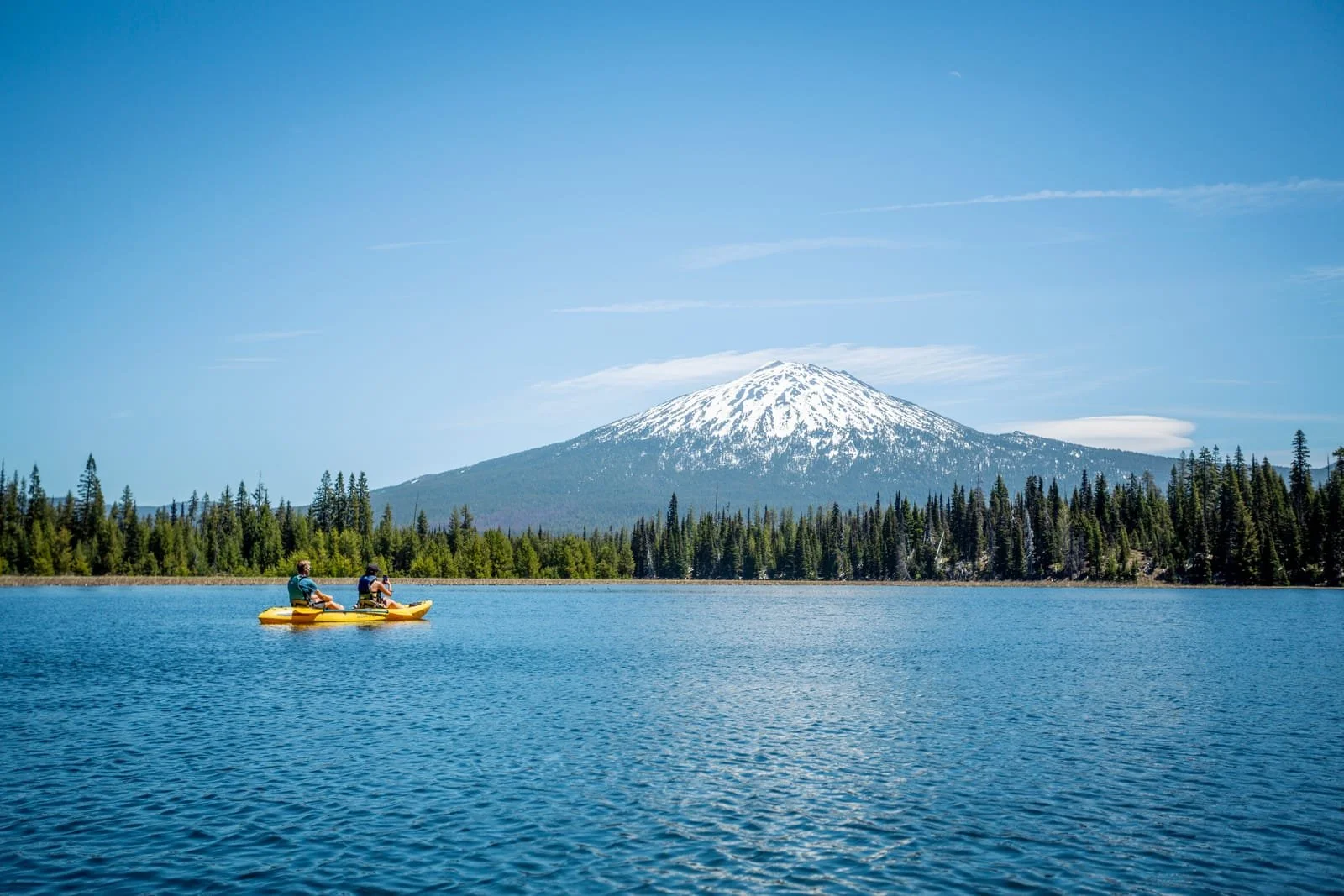
Kayaking on Hosmer Lake
Getting Around Central Oregon
Central Oregon is spread out — towns are anywhere from 20 to 45 minutes apart, and many adventures take you into remote areas. Having a car is essential.
If you’re already driving here, perfect. But if you’re flying in, the closest major airport hub is Portland International Airport (PDX). From there, it’s about a 3-hour drive to Bend. For wheelchair-accessible rentals, United Access near the airport offers adapted vans with everything you need. We used them in our Oregon Coast trip and had a smooth experience, so it’s a reliable option to kick off your Central Oregon adventure.
There’s also a regional bus system, Cascade East Transit, which connects Bend with nearby towns like Redmond, Sisters, and Prineville. It’s wheelchair accessible, but schedules can be limited. If you want the freedom to adventure to lakes, trails, and scenic drives at your own pace, having your own vehicle is by far the best choice.

Adaptive van rental with ramp
Epic Accessible Adventures in Central Oregon
Kayak on Hosmer Lake
Just south of Bend, Hosmer Lake feels like a postcard. Clear water winds through marshes surrounded by snow-capped peaks, and it’s one of the most scenic spots in the Cascades. With Wanderlust Tours, kayaking here becomes fully accessible. You can paddle independently, or guides can assist to make sure everyone gets on the water safely.
For kayaking in Central Oregon, you’ve got options. Join a guided paddle with Wanderlust Tours for a classic lake-and-river experience, or connect with Oregon Adaptive Sports if you need adaptive kayaks, transfer support, or one-on-one guidance. Either way, you’ll be out on the water surrounded by mountain views — a true Central Oregon highlight.
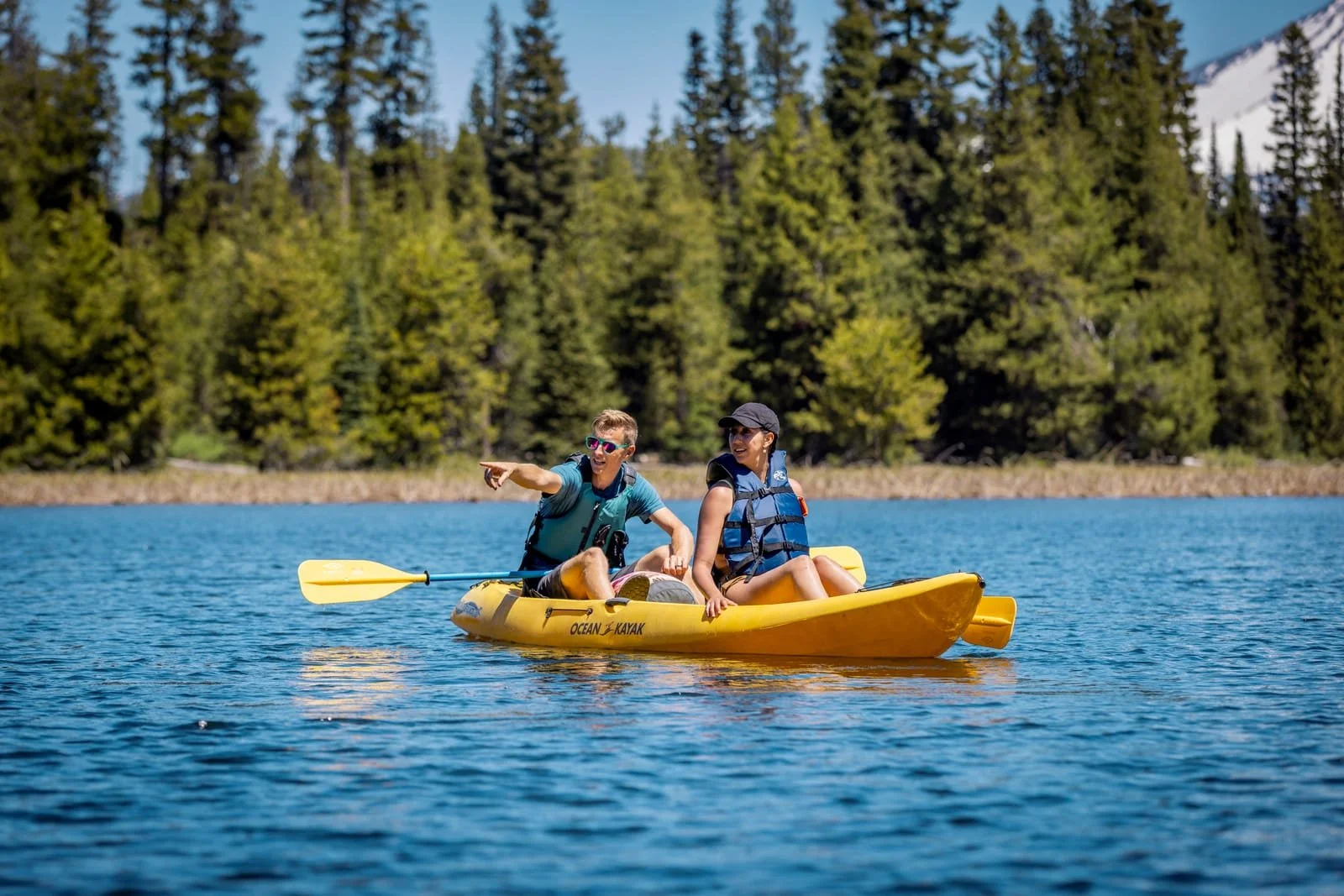
Enjoying the lake
Hike at Smith Rock
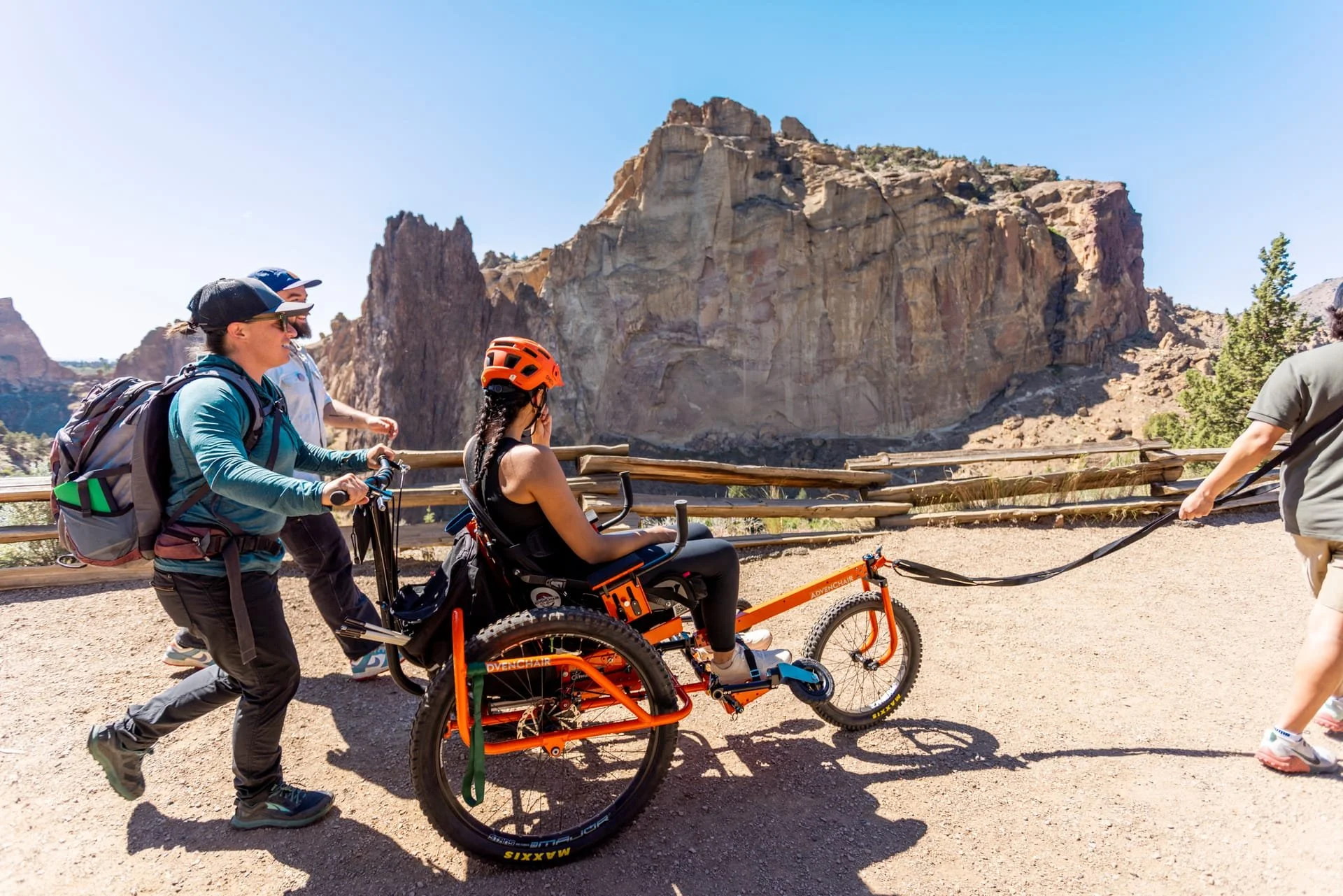
Smith Rock State Park is the kind of place that makes you stop and stare. Sheer cliffs rise above the Crooked River, golden grasses sway in the breeze, and trails wind through a landscape that feels both rugged and timeless. For many, hiking here would feel out of reach, but with AdvenChair, it’s possible.
Through this Wanderlust Tours experience, naturalist guides lead accessible hikes at Smith Rock and other iconic Central Oregon spots. The AdvenChair is an all-terrain, human-powered wheelchair designed for rugged trails. With a trained team assisting, you can go well beyond the pavement — down canyon paths, across volcanic ridges, even up into the Cascade Mountains.
Public tours run at Smith Rock and Benham Falls, but custom tours are where things really open up. You can dream big: hike up Tumalo Mountain for sweeping views of Mt. Bachelor, wander the cracked volcanic ridges of the Oregon Badlands Wilderness, or follow Paulina Creek through waterfalls and wetlands in the Newberry Caldera.
It’s an unforgettable way to experience the kind of terrain that usually feels off-limits. See Custom Accessible Tours.
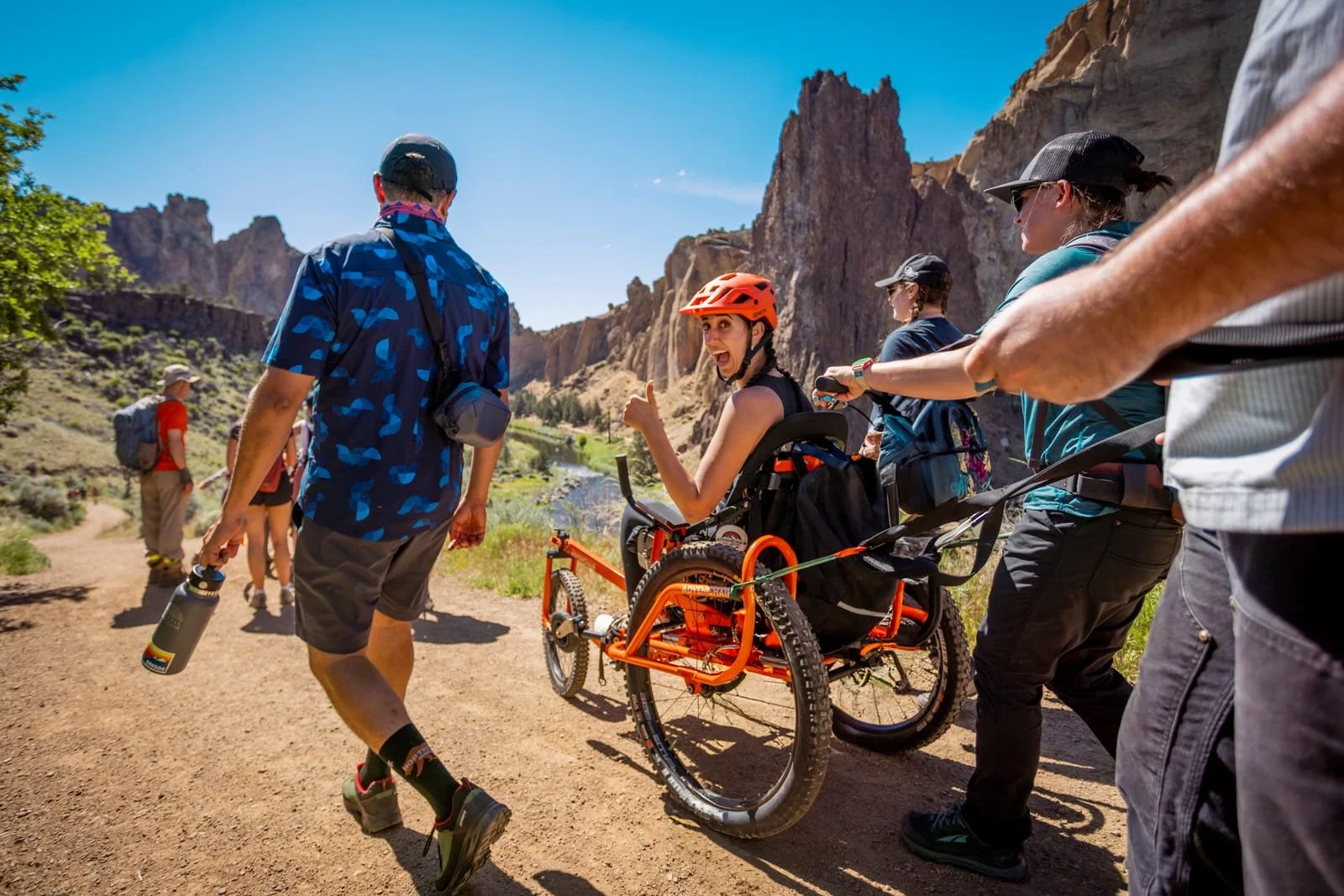
Hiking Smith Rock with Advenchair the all-terrain hiking wheelchair
Soak at Kah-Nee-Ta Hot Springs Resort
Reopened in Warm Springs, tribal-owned Kah-Nee-Ta Hot Springs is one of those places that feels worth the trip on its own. The thermal pools stay warm year-round, and you can take your pick between the big outdoor pools or smaller, private soaking tubs tucked along the river. If you’ve ever wanted to sit back in quiet water with mountain views and nothing but the sound of the river nearby, this is it.
You can make it an overnight thing, too. The Kah-Nee-Ta resort has accessible rooms, so you can stay overnight instead of making it a quick stop. You can spend the whole day here, moving between the pools, relaxing in the shade, and finishing with dinner on-site.
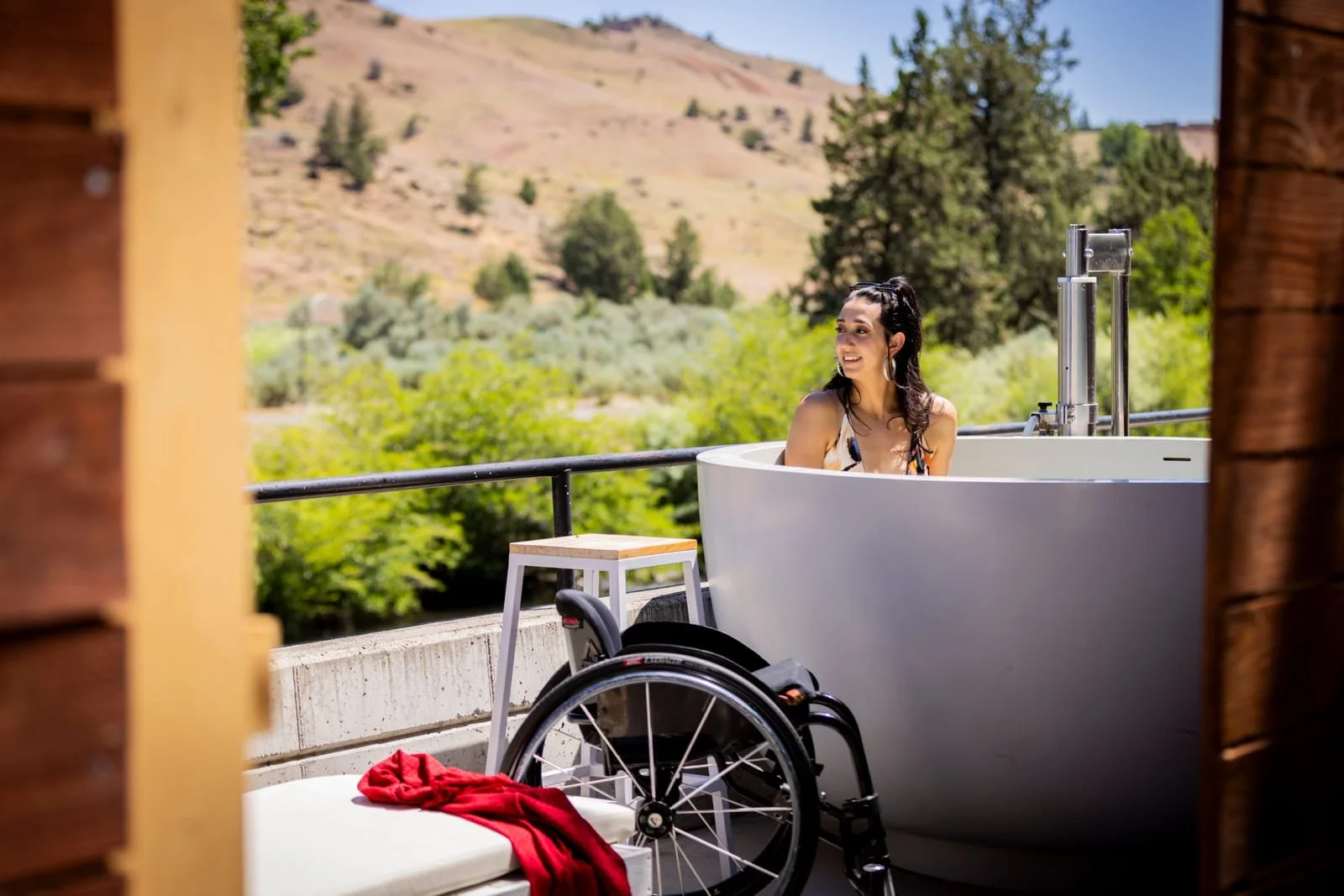
Kah-Nee-Ta Hot Springs - private soaking tub
Stargaze at Prineville Reservoir State Park
When the sun sets, head east to Prineville Reservoir, where some of Oregon’s darkest skies open up overhead. On summer nights, you might spot Jupiter, Mars, and the Milky Way stretching across the horizon. The accessible day-use area near the observatory makes it possible to roll right up to the viewing area. Just make sure you bring a jacket, because desert nights get chilly fast.

Stargazing through the telescope
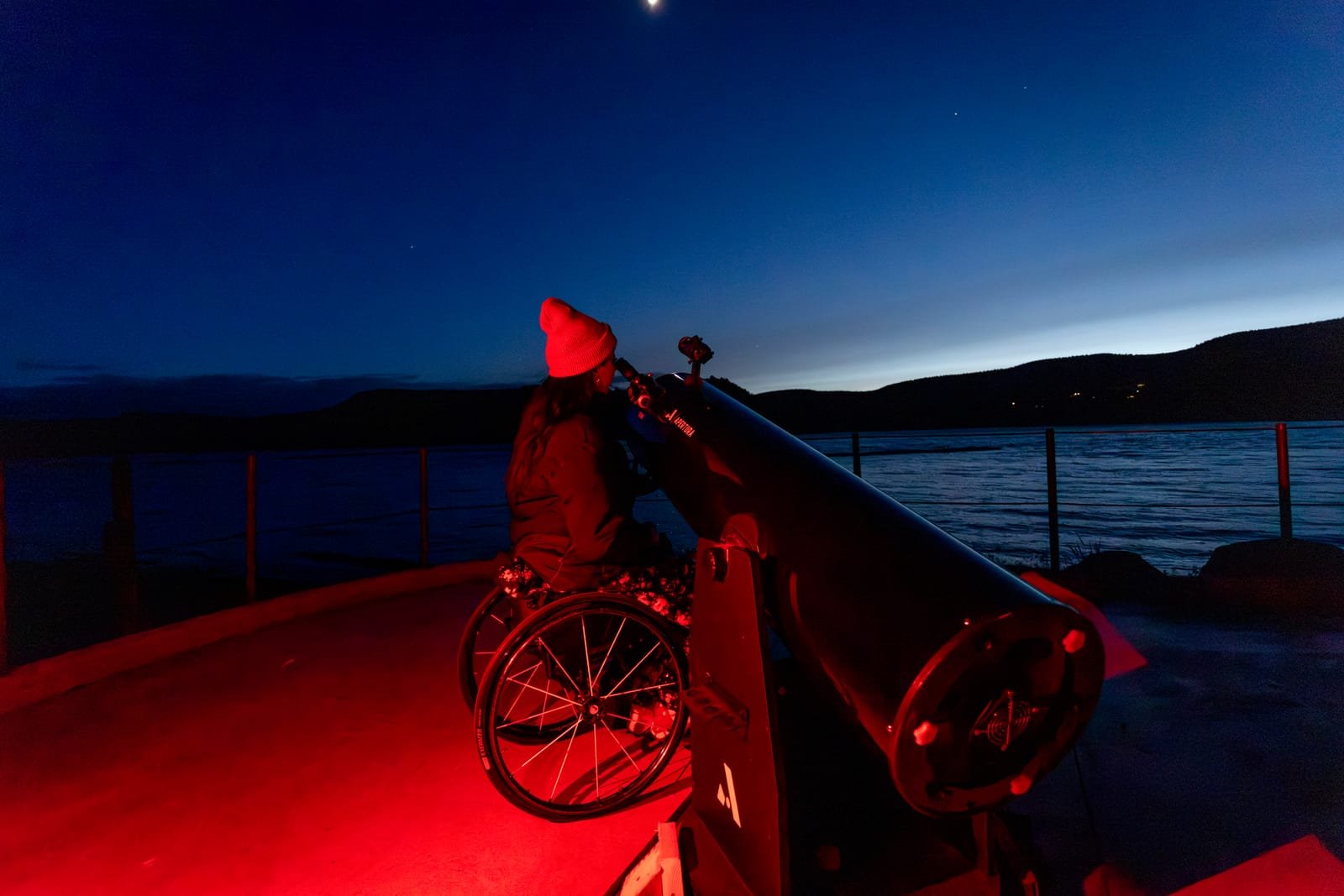
Stargazing at Prineville Reservoir State Park
Learn and Connect at the High Desert Museum
The High Desert Museum isn’t your typical museum visit — it’s an experience that mixes education, culture, and the natural world. One moment you’re face to face with native wildlife, the next you’re walking through a recreated Old West town or watching live demonstrations that bring history to life. Exhibits highlight Native traditions, frontier history, and the fragile ecosystems of the high desert, giving you a fuller sense of the region.
The museum is accessible with a step-free entrance, spacious pathways, closed captioning/subtitles on screen, tactile exhibits, accessible restrooms, and more. View more detailed information for the High Desert Museum here.
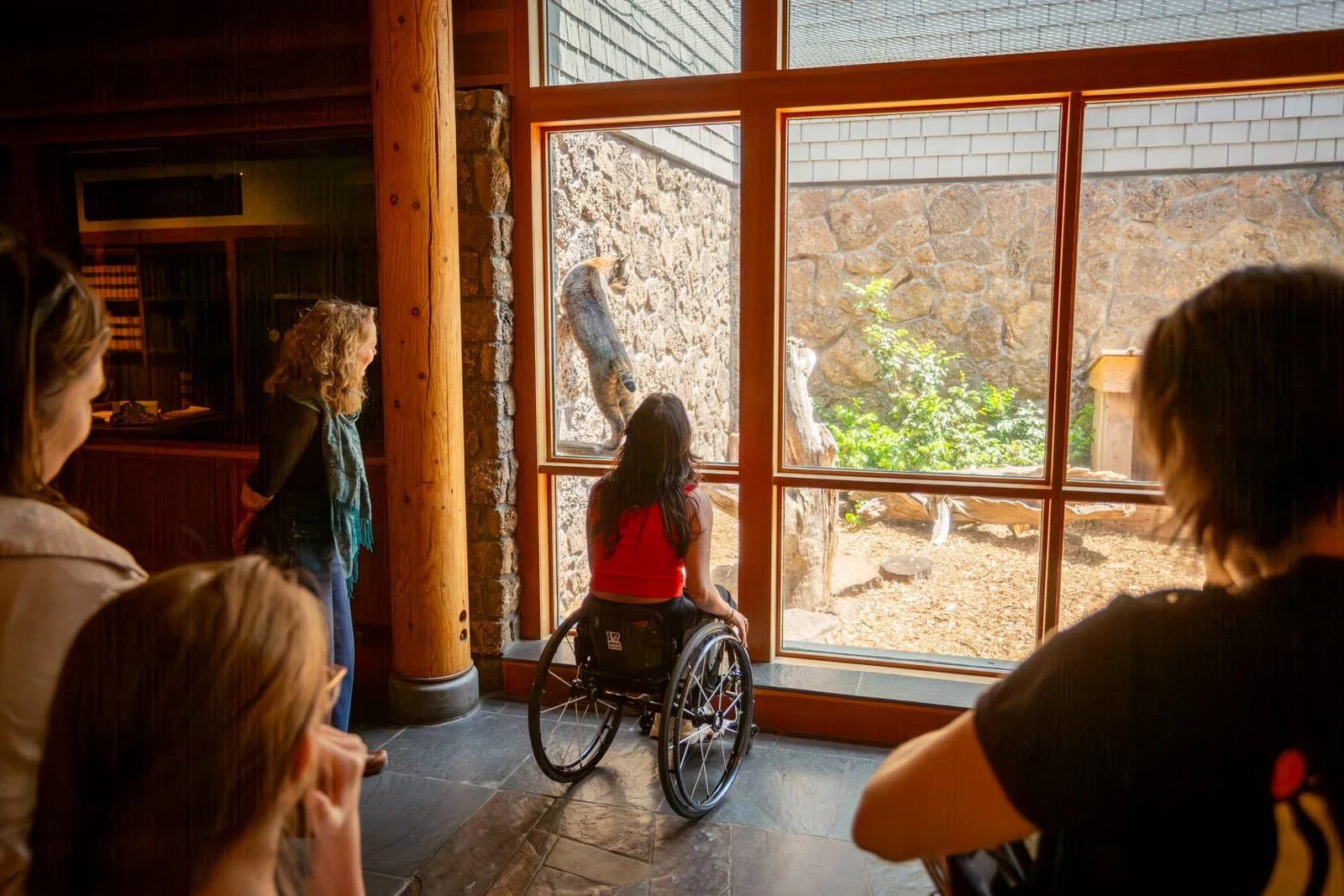
High Desert Museum
♿ Good to Know: If you’re looking for guided adventures with adaptive gear, Oregon Adaptive Sports is the go-to local resource. They outfit travelers with adaptive bikes, ski gear, and specialized equipment, and their team is on hand to help with everything from transfers to on-trail support. With them, activities like kayaking, skiing, hiking, and cycling become possible in ways that feel both safe and fun.
Where to Stay in Central Oregon: Accessible Hotels
Central Oregon covers a lot of ground, and where you stay can shape your whole trip. Bend is the hub, but smaller towns like Sisters, Redmond, and Sunriver all bring something different to the table. Here’s what to expect in each, plus a few standout accessible hotels.
Bend
Bend is the region’s heartbeat. Breweries line the streets, the Deschutes River winds right through town, and trails spread out in every direction. If you want to be in the middle of the action, staying here makes sense.
Element Bend blends sustainability with modern comfort, offering accessible rooms with roll-in showers, wide doorways, and plenty of turning space. Its location downtown makes it easy to walk or roll to shops and restaurants.
Hotel Peppertree Bend, BW Premier Collection is a stylish stay that balances comfort with accessibility — a good pick if you want something a little more upscale without leaving downtown.
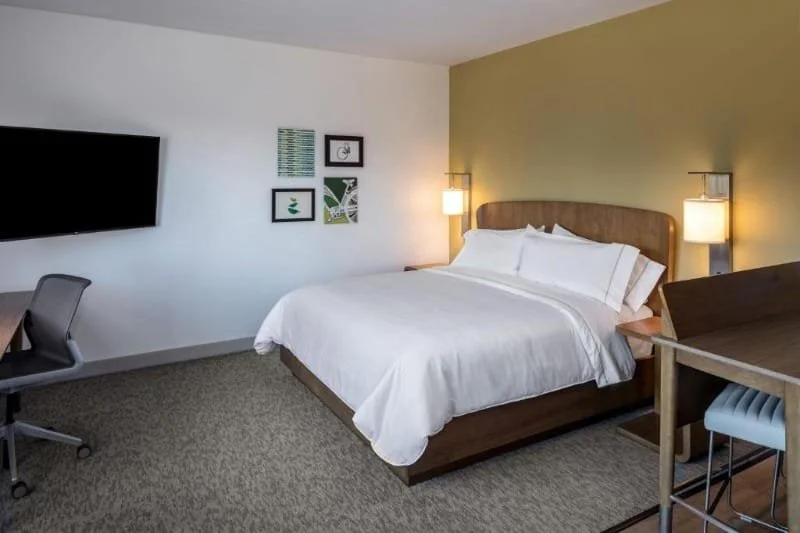
Accessible room at Element Bend
Sisters
Sisters feels like a step back in time, with its Western-themed downtown and quiet pace. If your idea of a trip is less nightlife and more browsing local shops after a hike, this is your place.
GrandStay Hotel & Suites offers spacious, accessible rooms and a pool with a lift, right in the middle of town.
Redmond
Redmond is practical — close to Smith Rock and the airport, and more affordable than Bend. If you want a quieter base that’s still central, this is it.
SCP Hotel Redmond combines boutique charm with verified accessibility. Don’t miss the rooftop patio for sunset views.
Sunriver & Resorts
For a resort-style escape, Sunriver is ideal. Paved trails connect golf courses, shops, and the Deschutes River, so you can do a lot without getting back in the car.
Sunriver Resort and Brasada Ranch are top picks, both offering full resort amenities and verified accessible rooms.
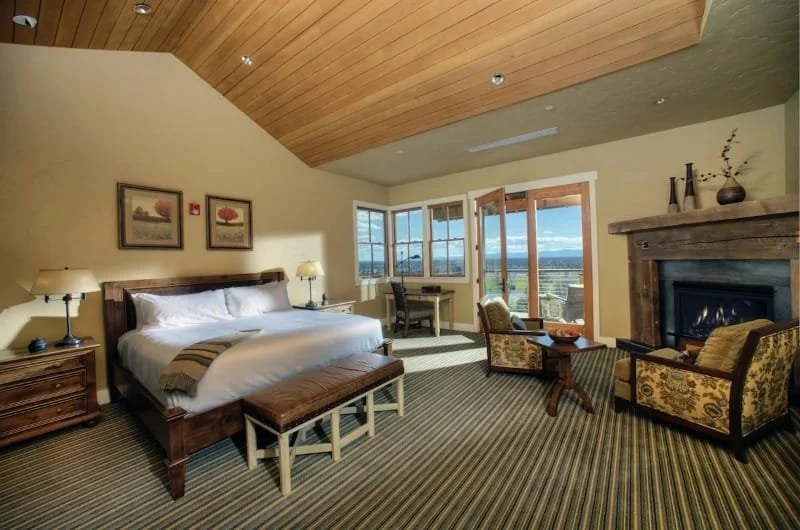
Accessible room at Brasada Ranch
Where to Eat in Central Oregon
Central Oregon’s food scene is shaped by its landscape — fresh produce from nearby farms, craft beer brewed in the region, and chefs who mix rustic flavors with modern flair. Each town brings something a little different.
Bend has a growing food culture that pairs perfectly with its outdoorsy vibe. Wild Rye at Juniper Preserve is a standout — serving seasonal dishes with sweeping views of the Cascade Mountains. It’s the kind of place where the setting elevates the meal, making it as much about the view as the flavors.
In Sisters, things move at a slower pace, and dining reflects that. The Ski Inn Taphouse is a cozy spot that doubles as both a small inn and a local hangout. Inside, the vibe is relaxed and friendly, with a menu of comfort food favorites and a long list of local beers and ciders. It’s the kind of place where you can settle in after a day of hiking nearby trails, surrounded by locals and visitors alike.
Redmond is building its own food identity, and it’s worth a detour just to eat here. The Rooftop at SCP Redmond is one of the most stylish dining experiences in the region, with small plates that change with the seasons and views that stretch across the city to the Cascades. Just downstairs, Terra Kitchen leans into modern, plant-forward dishes — bright flavors, creative plating, and a menu that feels as fresh as the local produce it uses.
If your trip takes you east to Prineville, the vibe shifts to something more laid-back and community-driven. Wild Ride Brewing is a local favorite. A big open space where beer flows, food trucks rotate, and people gather after work or after a day outdoors. It’s casual, fun, and a great way to feel plugged into small-town Oregon life.

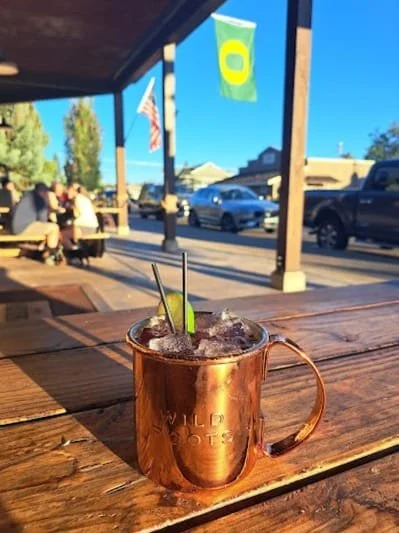

Food, drink, and dessert in Central Oregon
Quick Tips for Visiting Central Oregon
Pack for the high desert. Days can be hot and nights drop fast — even in summer.
Bring sun protection. Sunscreen, hat, and sunglasses are essential — the sun is stronger at elevation.
Stay hydrated. The dry air can sneak up on you, so always bring water with you.
Wheelchair users: Surfaces vary a lot — paved in town, gravel/dirt at some trailheads — so plan ahead for what’s doable or book adaptive adventures like AdvenChair.
Plan Your Central Oregon Adventure With Confidence
Central Oregon delivers when it comes to outdoor adventure — kayaking mountain lakes, rolling trails under volcanic cliffs, or tasting craft beer after a day outside. The best part? More and more of these experiences are verified for accessibility, so you can focus on the fun.